TikTok’s “price pre-trial” mechanism goes online: reshaping platform pricing order and consumer trust
TikTok Shop announced that, as of this week, all sellers would be subject to a new “price pre-trial” mechanism for the distribution of commodities through the TikTok Vendor Centre. This initiative aims to enhance platform pricing transparency, protect consumer interests and regulate price order to address potential risks in the rapidly growing social electrician ecology.
TikTok Shop’s “price pre-trial” mechanism requires sellers to submit standard selling and promotion prices in advance of a commodity, and the system will automatically verify price reasonableness through algorithms. If the price is determined to be unreasonable (e.g. far above the market average) or is suspected of being misleading (e.g. the price of the van highland to create a discount scenario), the commodity will be rejected and the seller will have to resubmitted after adjusting the price. This mechanism further reinforced TikTok ‘ s previous Fair Pricing Policy by explicitly prohibiting misleading pricing, price fraud and high freight costs.
The new regulations require: prohibition of the setting of significantly different prices in different variants of the same commodity (e.g., colour or size) to attract consumer hits; protection against price manipulation by sellers during periods of high demand (e.g., holidays); freight charges not exceeding $40 and reflecting actual logistics costs; and regular inspection of market prices by sellers to ensure that pricing is competitive with the same product.
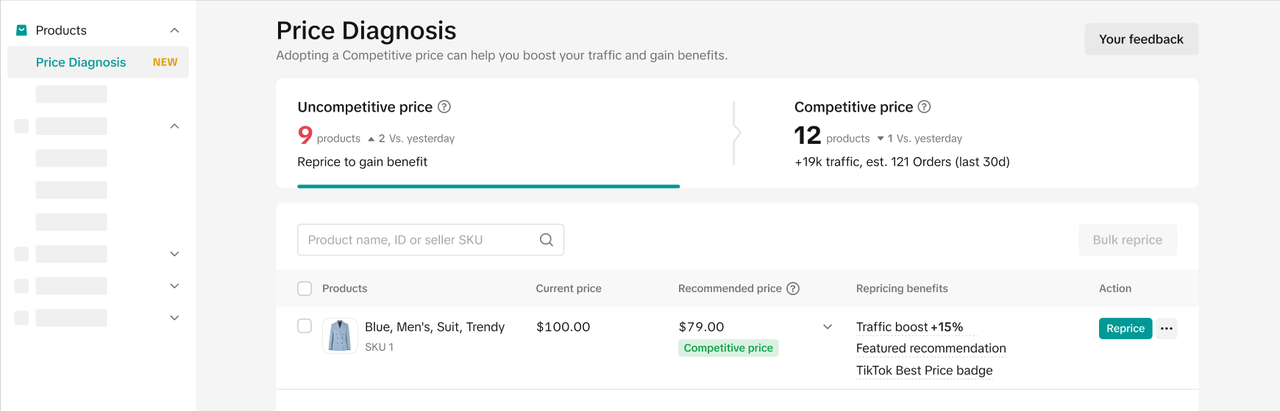
TikTok’s “price diagnostic” tool further supports this mechanism by allowing sellers to adjust the prices of multiple SKU (inventory units) in bulk and by providing recommended prices to increase the exposure of commodities on search, referral and “For You” pages. The default price adjustment is valid for 30 days and the adjusted price must be maintained for at least one day to obtain the flow addition.
TikTok Shop has been a quick runner for social generators since its 150 million-month live user and short video-driven shopping experience in the United States in 2023. In 2024, TikTok Shop sold over $100 million a day in the United States on a black Friday, and the number of buyers per month nearly tripled. Rapid growth, however, also poses challenges: some vendors mislead consumers through low-priced flows or high discounts, undermining platform trust. In 2024, TikTok banned 37 million lists of commodities that did not meet its criteria, demonstrating the high priority attached to compliance.
At the same time, global trends in consumer protection legislation are driving the platform to strengthen governance. The Digital Markets, Competition and Consumers Act 2024 in the United Kingdom requires the electrician platform to ensure transparency in vendor identification and pricing information and to avoid the “dark pool model” that misleads consumers. Similarly, the EU ‘ s Unfair Contract Clause Directive emphasizes the clarity of user agreements, and TikTok is therefore required to optimize its data and pricing policies. TikTok’s “price pre-trial” mechanism is a response to these regulations and aims to increase consumer confidence by technical means while protecting fair-competitive sellers.

Related Posts

EA admits that the hand-drive Command and Conquest: The Enemies Away from the Core Experience has led to the subsequent re-establishment and opening of the classic.

GTA 6 re-emphasizes its PS5 monopoly strategy, with the core user being the host player