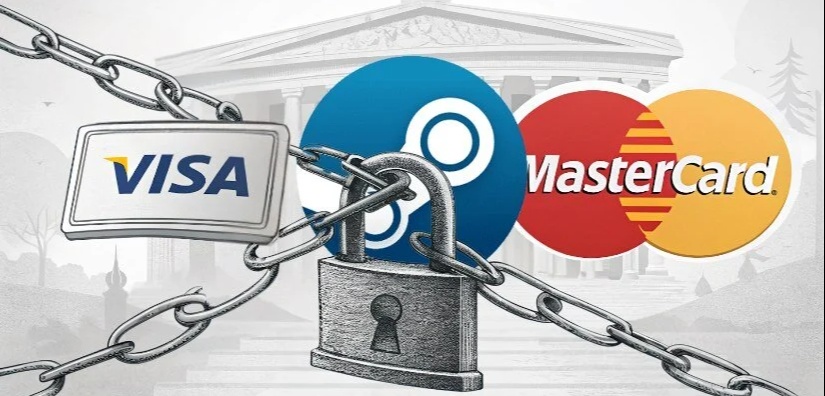
Japan’s ex-parliamentary stressed that the payer’s rights were too great. Three years ago, he was involved in a game review.
Japan’s former parliamentarians have been shiversing for three years to expose the video game of Visa and Mastercard.
It is explained that the initial pressure was directed mainly at adult platforms such as DLsite and then gradually extended to other markets and game distributors. In his view, the most worrying was the extremely hidden nature of the review process and its total lack of transparency and lack of knowledge of its criteria.
He criticized Visa, Mastercard and others for not disclosing the true principle of payment to operators, as if they were concerned with their own reputation and not responsible for specific decisions. The platform is often suddenly given an ultimatum that “no more payment services will be available from next week” and even a notice is not sent directly by the card organization, but via a billing line or payment processor.

Even more disturbing is the deliberate decentralization of responsibility, particularly in the case of Steam, which makes it difficult to pursue accountability. Visa and Mastercard denied any direct involvement, but as a result of their rules, they were ultimately executed by the receiving and paying parties under their control. This layered structure makes it difficult for the outside world to determine who is leading the review.
It was stressed that this lack of transparency and accountability is at the heart of the problem, and that the lack of a clear understanding by developers and platforms of the true reasons for the restrictions makes it difficult for the public to organize resistance. He noted that it was the ignorance of the public that was being used by many companies to maintain their influence, which was quite unhealthy.
He concluded with two recommendations: one to raise public awareness of such implicit reviews and to remind that any type of content might be restricted; and the other to call on the enterprises concerned to decentralize their payments and avoid being completely passive because a single payment pipeline was blocked.


Related Posts

90% of hand-travel developers consider introducing loyalty and reward systems to enhance player retention

P.C. Game end effect continues to increase, with game income over half of top 20